
Mathoms No. 4
Welcome to the fourth issue of Mathoms, a Tolkien newsletter! Thanks to those of you who are new subscribers and, of course, those of you who continue to subscribe!
An Inkling
When I first received the three volumes of Tolkien’s Collected Poems, I foolishly thought I would devour them all within a few months. And maybe if I had just read them straight through I would have. Instead, I discovered what many others have as well: these are monumental achievements of scholarship. Almost every line and footnote can seemingly be scrutinized and mined for new insights into Tolkien’s life, poetry, and Legendarium.
As one example only, in the biographical background and history about Tolkien’s first published poem “Goblin Feet,” can be found quotations from two previously undocumented letters Tolkien wrote to Edith in 1915. In the first letter, Tolkien wrote asking Edith, “Why didn’t you like the first of the ‘Goblin feet’ verses darling? Too mothy and batty?” In the second letter, he wrote to her: “‘Goblin Feet’ is a little swamped and rather disappointing in print.” Nothing groundbreaking of course, but these two brief snippets we now have provide further context to one of Tolkien’s most significant developments as a young writer: his growing dissatisfaction with smaller, fairy-sized elves. The two letters also demonstrate that we have many more Tolkien letters of significance left to discover.
Anyway, over the course of the past two years, I have been meticulously making my way through the first of the three volumes. This has yielded some interesting observations, some of which I have blogged about before, some of which I am planning to write about in the future. One poem I read this month was originally called “Courage Speaks to a Child of Earth,” and then was later changed to the title “The Two Riders.” Tolkien wrote this decades before he ever conceived of The Lord of the Rings, and it ostensibly has nothing to do with the book. Reading it, however, I was immediately struck by how much the first part of the early version (Draft A) of the poem reminded me of Gandalf riding Shadowfax:
Tis a rhythmic course
On a strong-limbed horse
With the round earth fleeting under:
The Wind in our ears
Is roaring years,
And his beating feet are thunder
His sweat is a-reek,
Yet the things we seek
Are a million miles out yonder
O good is speed,
And yet, more we need -
There is not one hour to squander.
…
Yea! though mighty the Sun
when his course is run
And his beauty doth not blind us
O’er the world’s pale rim
Till our days blow thin
And the stars are all behind us
As I said, for me, I cannot help but think of the various descriptions of Gandalf’s ride to Minas Tirith, as told from Pippin’s point of view:
The dark world was rushing by and the wind sang loudly in his ears. He could see nothing but the wheeling stars, and away to his right vast shadows against the sky where the mountains of the South marched past…Gandalf cried aloud to his horse. ‘On, Shadowfax! We must hasten. Time is short. See! The beacons of Gondor are alight, calling for aid. War is kindled…’ …Then Shadowfax gathered himself together and sprang away, and the night flowed over him like a roaring wind….It was twilight: the cold dawn was at hand again, and chill grey mists were about them. Shadowfax stood steaming with sweat, but he held his neck proudly and showed no sign of weariness.
What I wrote this month
This past month on the blog, I wrote about the legacy of Bilbo and explored an unspoken, potential reason why Aragorn, Legolas, and Gimli may have abandoned the Quest at the Breaking of the Fellowship.
What I read this month
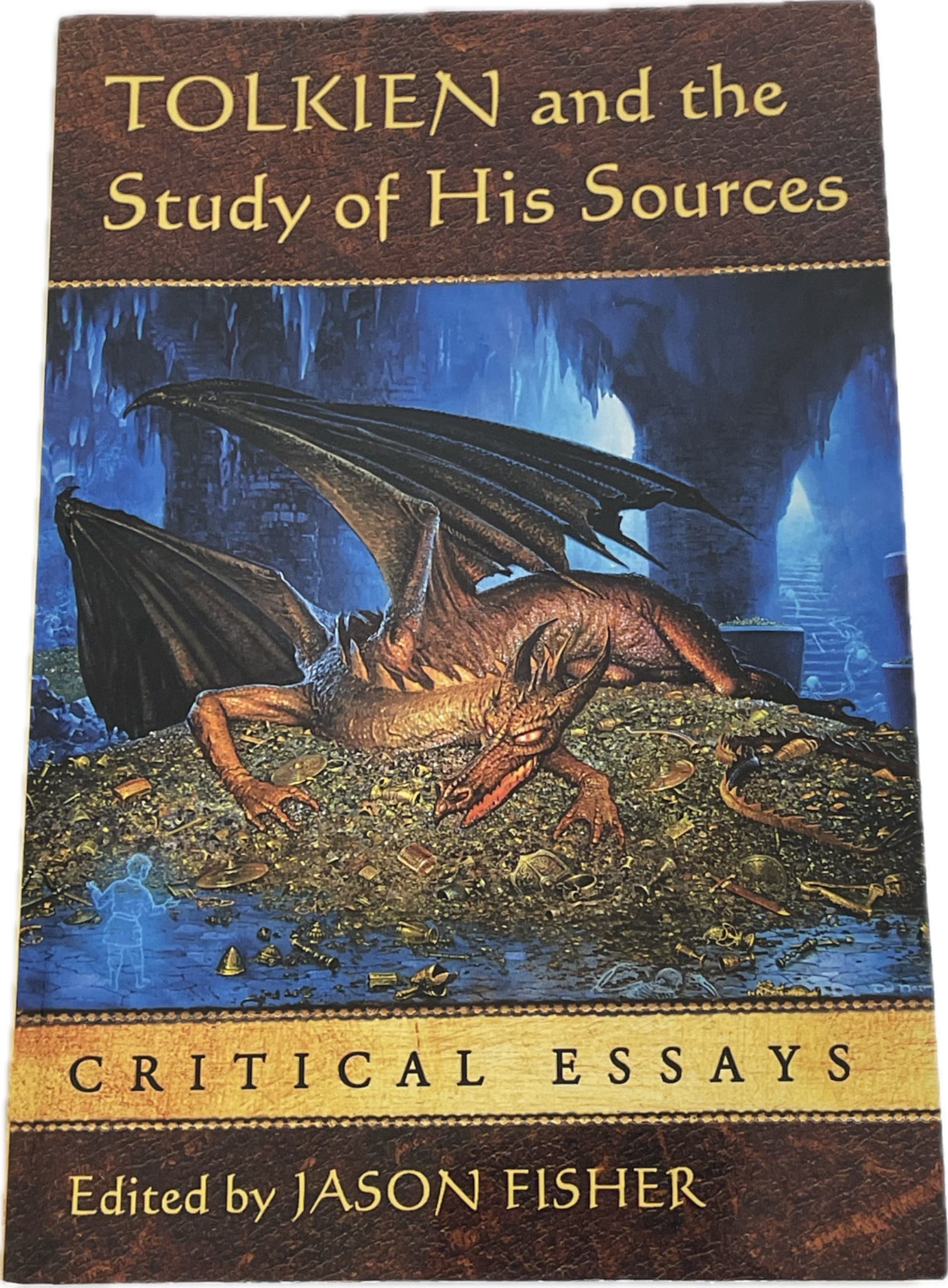
I finished Tolkien and the Study of His Sources, a collection of essays edited by Jason Fisher, and highly recommend it. It’s an excellent arrangement of insightful studies of a variety of likely sources for Tolkien, written in a fairly disciplined manner (i.e., noting similarities and resonances, rather than uncritically claiming direct influence).
I am just starting to make my way through the cornucopia of new Tolkien scholarship released recently. From the new Inklings Studies to Mythlore, there is ample new reading material. Having myself reviewed Ben Reinhard’s The High Hallow, I was interested in Holly Ordway’s new review of the book. She felt much the same as I did apparently: there are bright spots in the book, but overall it suffers from a lack of depth and definition. A decent introduction for new readers, but not as promising as one might hope based on its title and premise.
Tom Hillman is always worth reading, and his Tolkien Society Award-winning article (“The Tides of Time, the Tides of Fate, and the Power of Song”) from last year’s The Journal of Tolkien Research touches briefly on a facet of Sam that I hope to explore in a forthcoming blog post. It is also very closely concerned with some other material I am working on related to Tom Bombadil. For me, the essential question of the article, which one may view as a gateway to a profoundly important aspect of Tolkien’s world, is this: “how powerful must Song be in a Secondary World designed through Song, which in the end will be healed through Song?” But read the whole article for many more excellent insights.
Congratulations also to Miriam Ellis on her award-winning artwork: “The Long Winter 1158: Gandalf Helps the Hobbits.” Her blog post about the piece last year is a lovely reflection on the theme of pity in Tolkien’s work.
Bradford Lee Eden has prepared a fascinating partial bibliography of the library of Tolkien’s son, Michael.
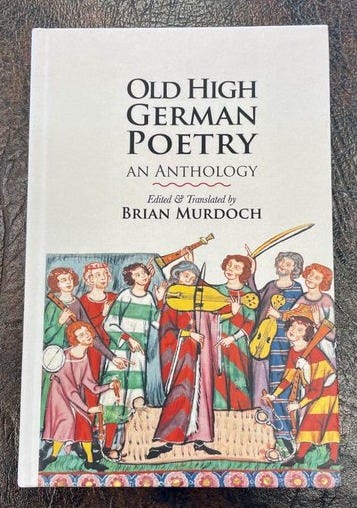
I very much enjoyed this anthology of Old High German poetry edited by Brian Murdoch and published by Uppsala Books. This is a book I think Tolkien might have a lot to say about. I especially enjoyed the Hildebrandslied, which reminded me vaguely of a more formal, less chaotic version of the Finnsburg Fragment. My biggest complaint is that the book is far too short! I’d have loved a full translation of the Evangelienbuch along with a full translation of The Heliand to compare it to.
The Hoard
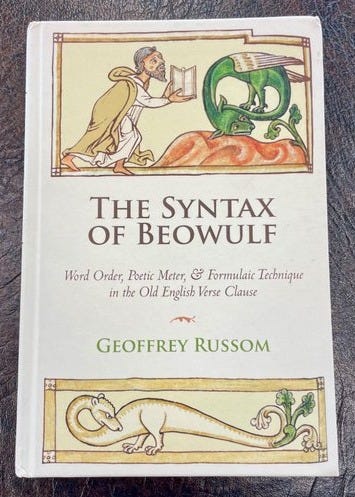
Some recent additions to my library and Tolkien collection. I added a copy of another Uppsala Books publication: Geoffrey Russom’s The Syntax of Beowulf. The book appears to be a highly technical analysis of the syntactic structure of Beowulf, which will require careful attention and from which I expect to learn a lot.
The first volume of Malcolm Guite’s long-awaited Arthuriad has arrived: Galahad and the Grail. I bought the deluxe slipcased edition:
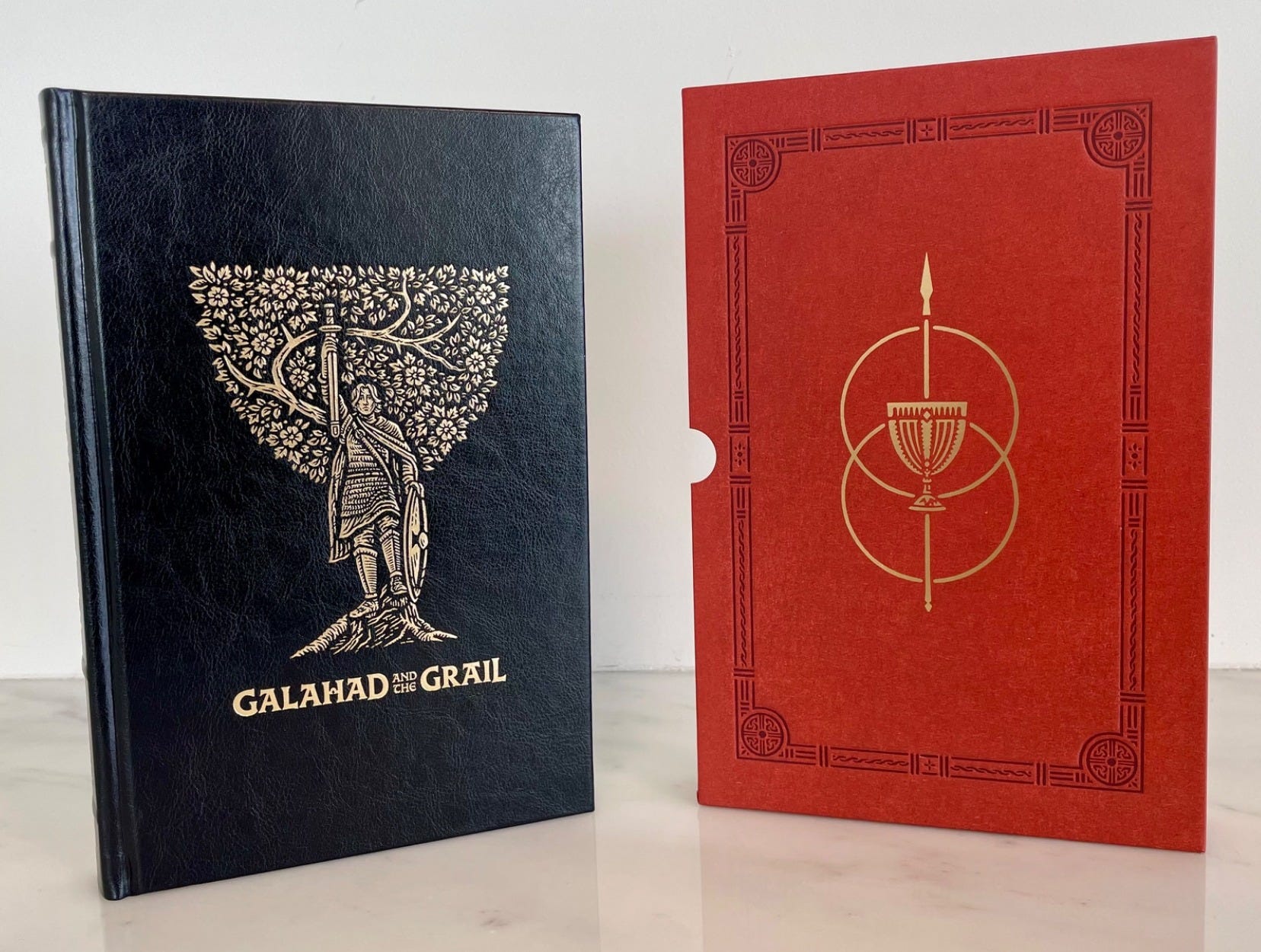
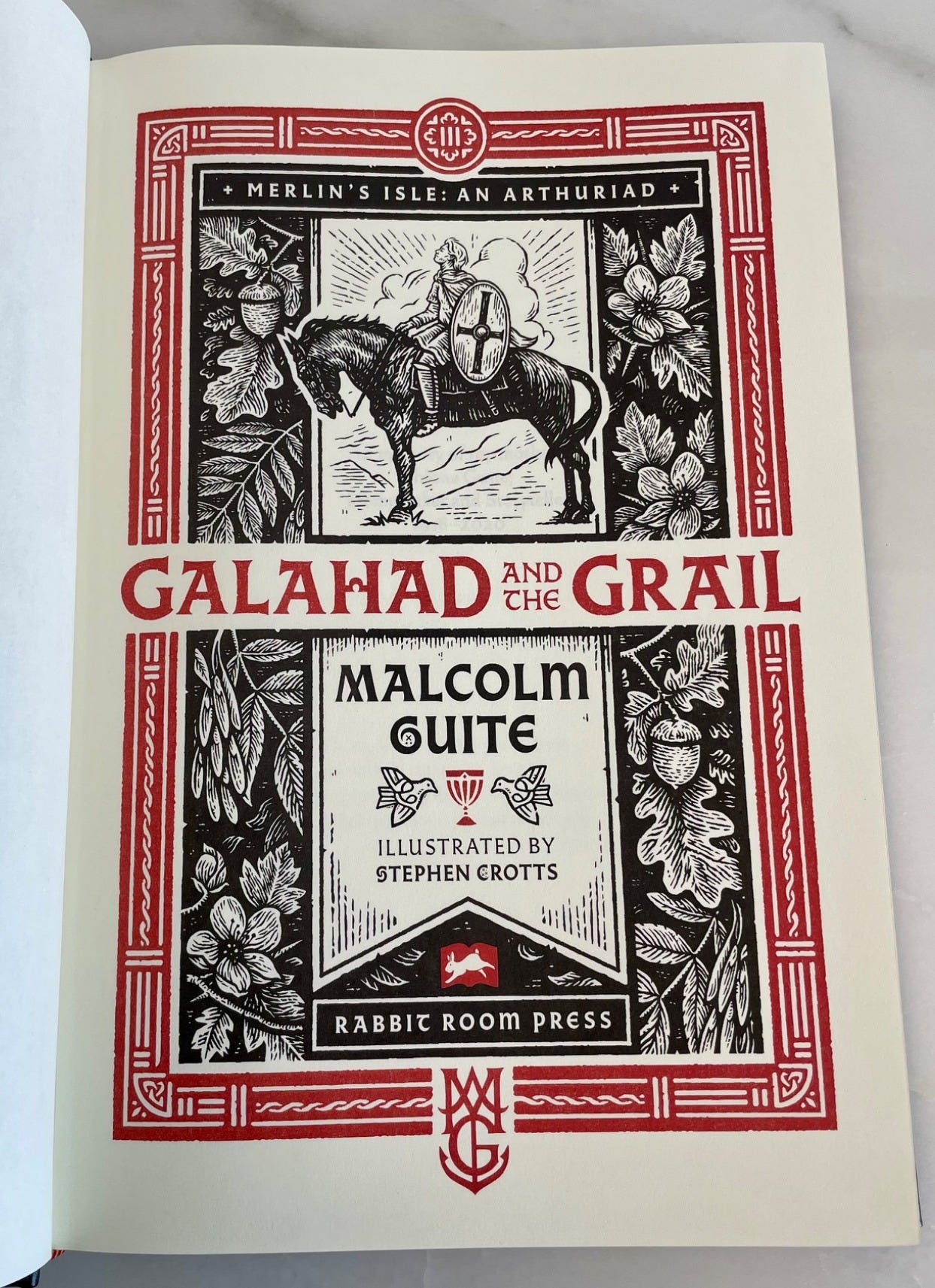
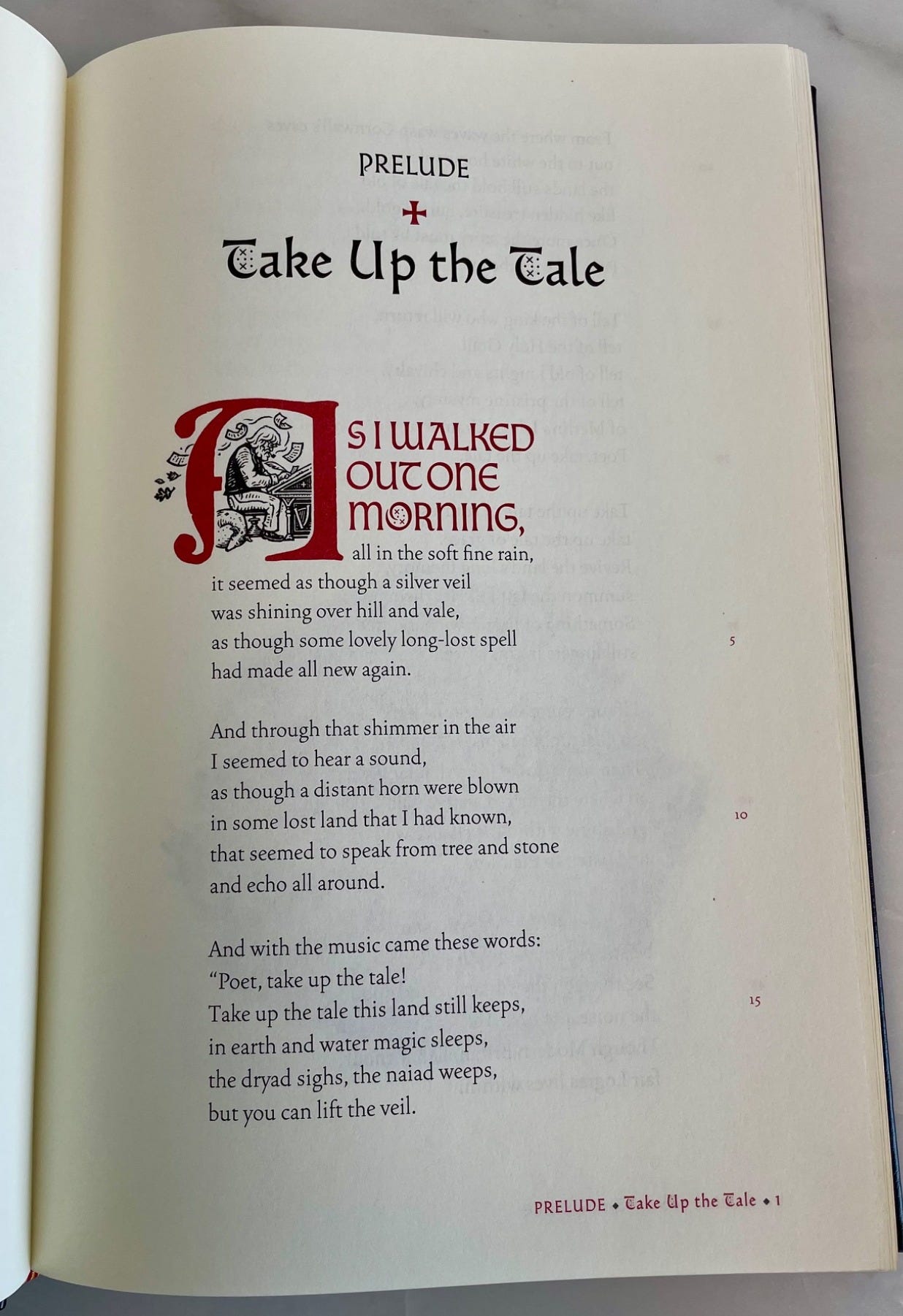
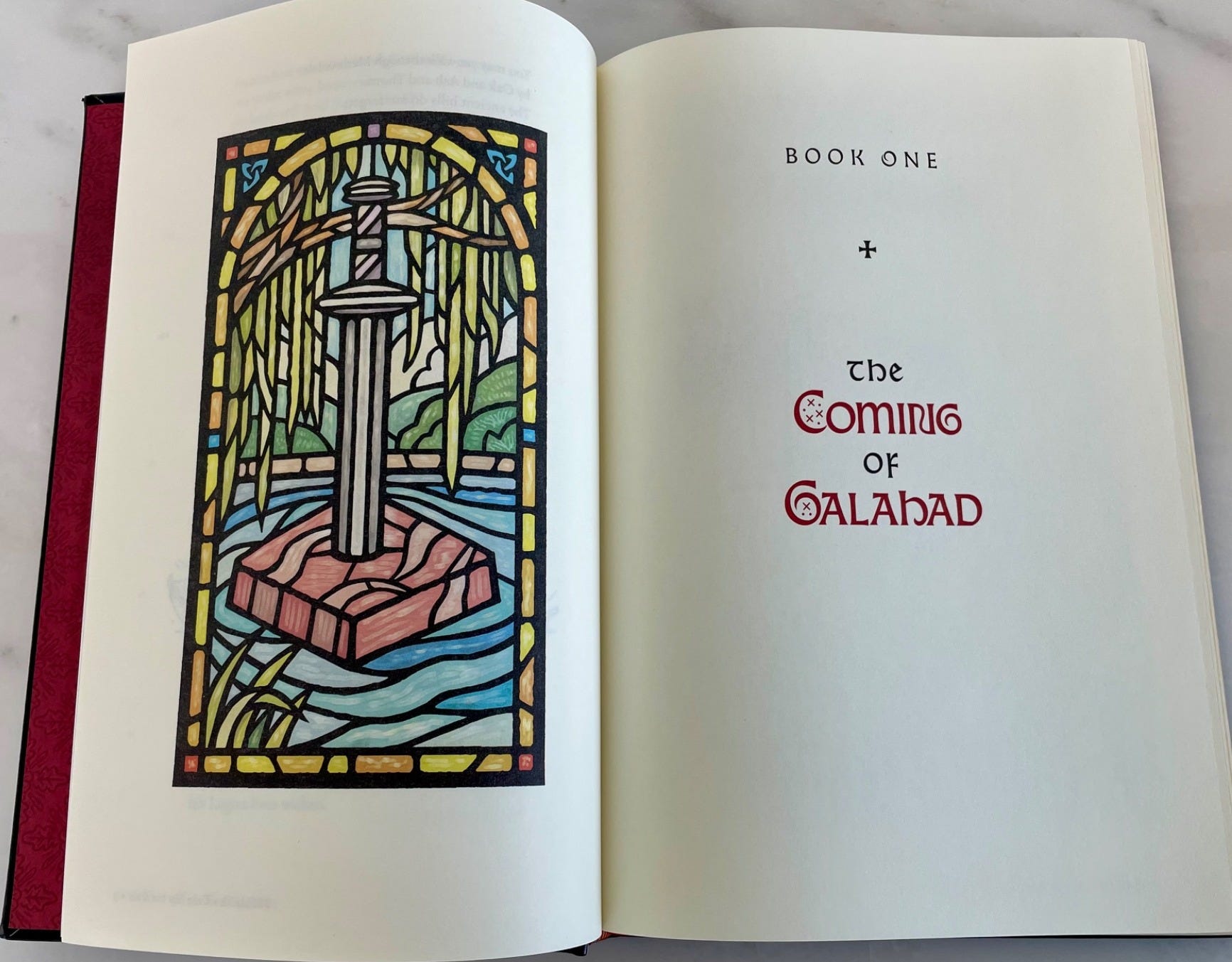
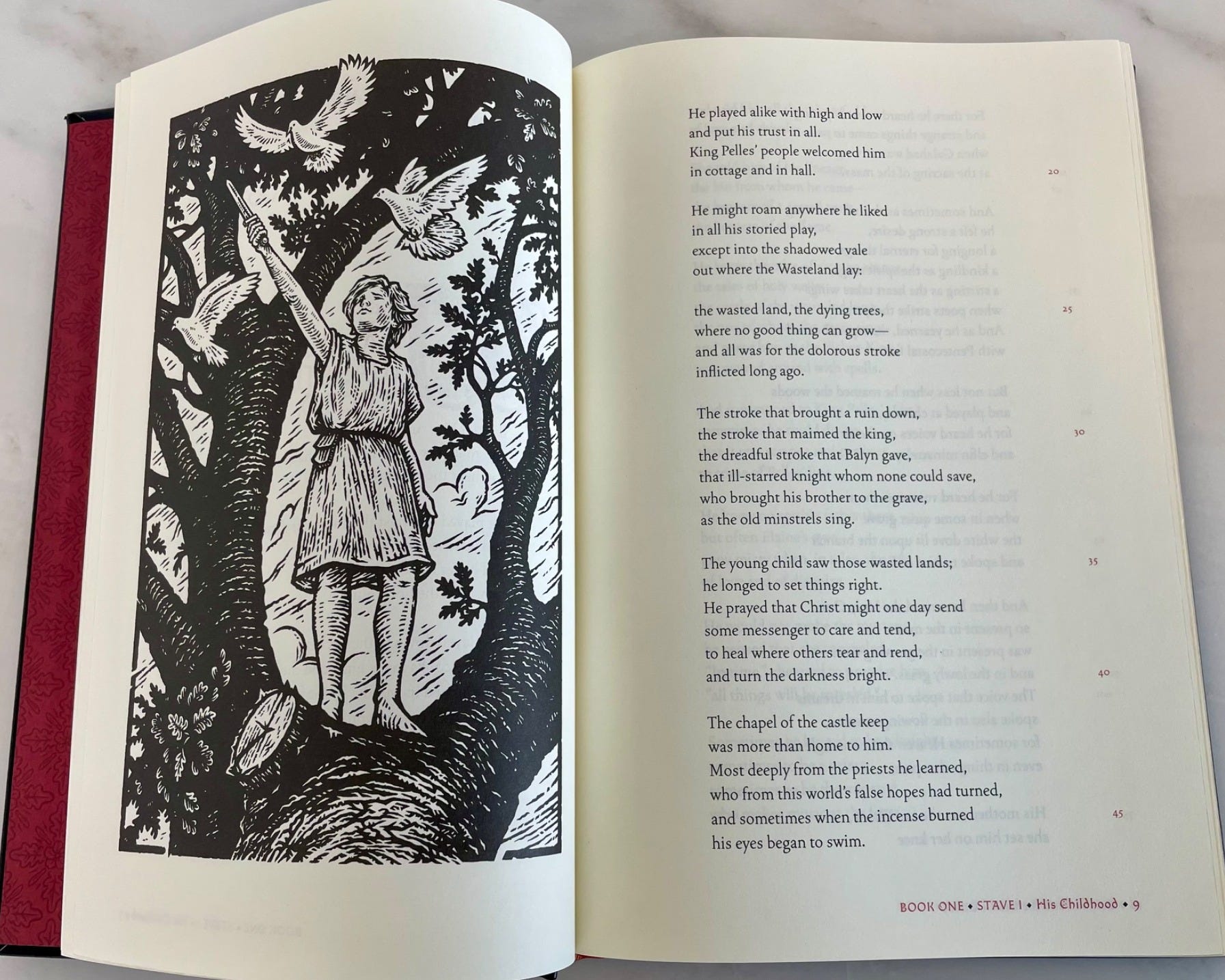
The poetry is moving and the illustrations by Stephen Crott are delightful. I’ve just started reading it, but I can already tell this is a treasure of a book I will return to often.
Another beautifully illustrated book I received this past month is this edition of The Poetic Edda hand-illustrated by Joel Trumbo of Tamburn Bindery.
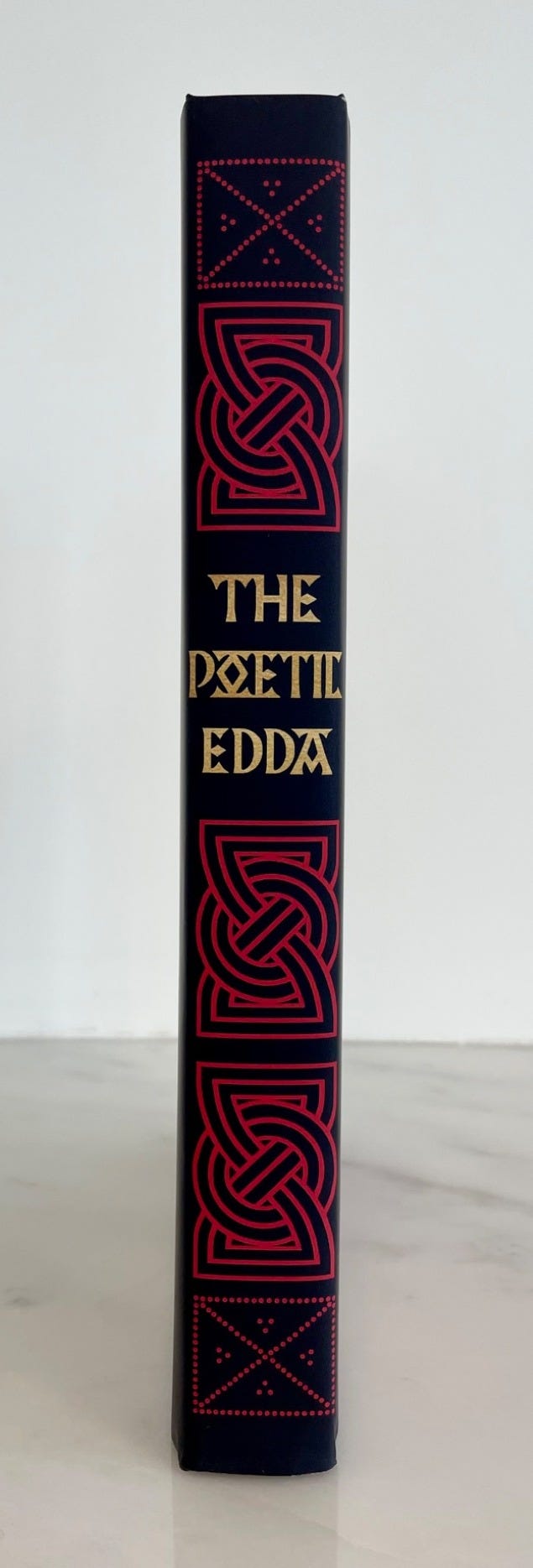
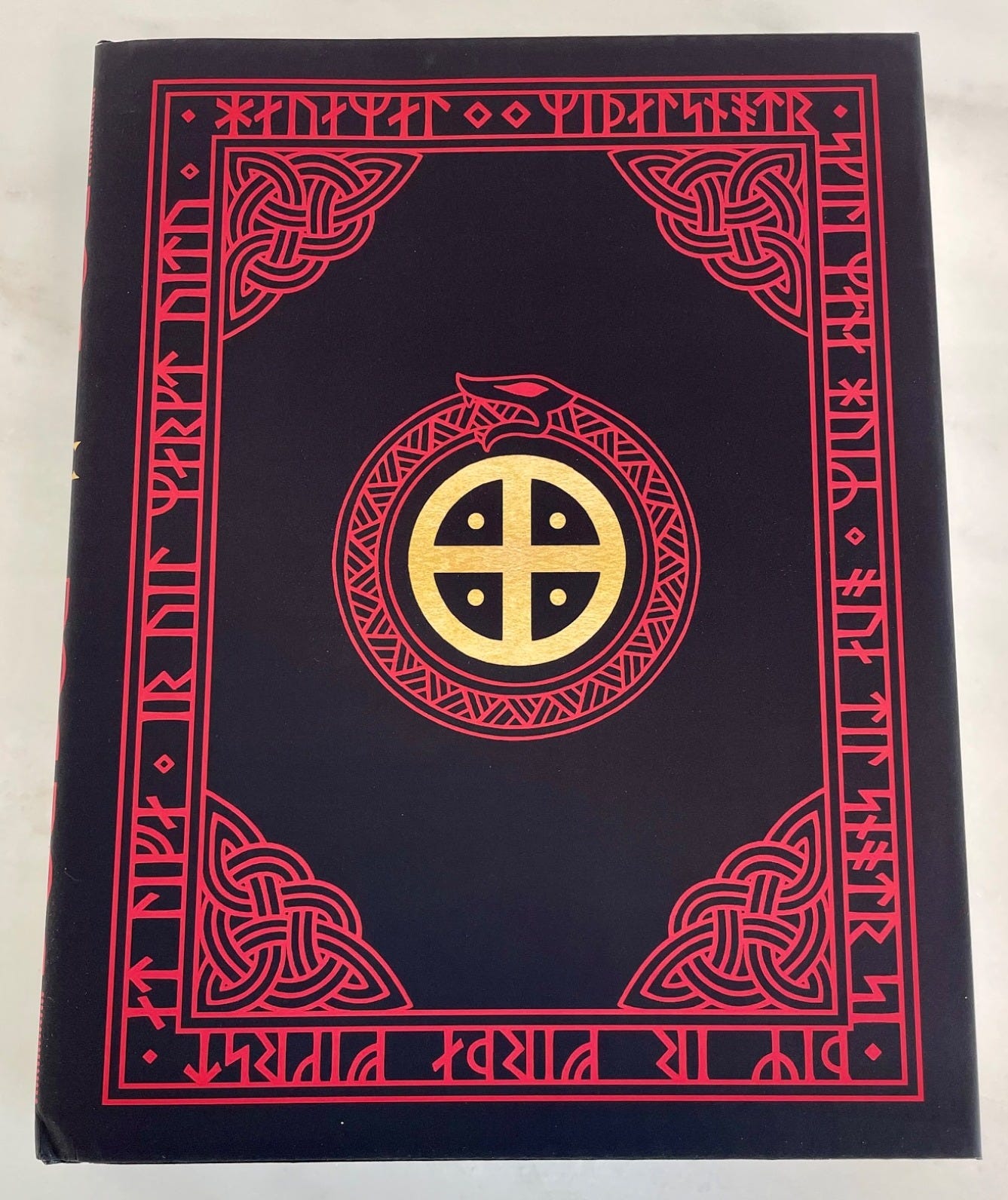
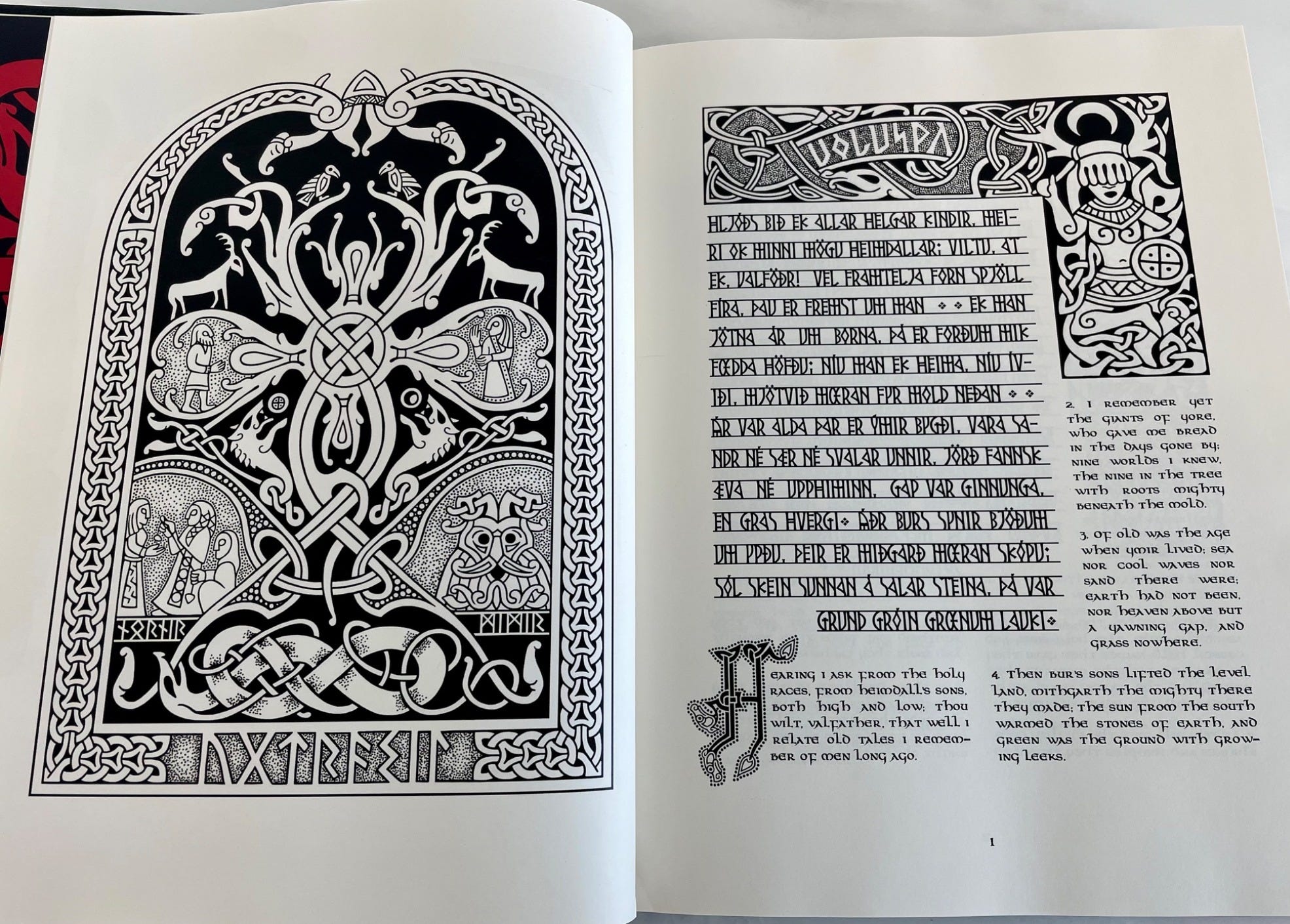
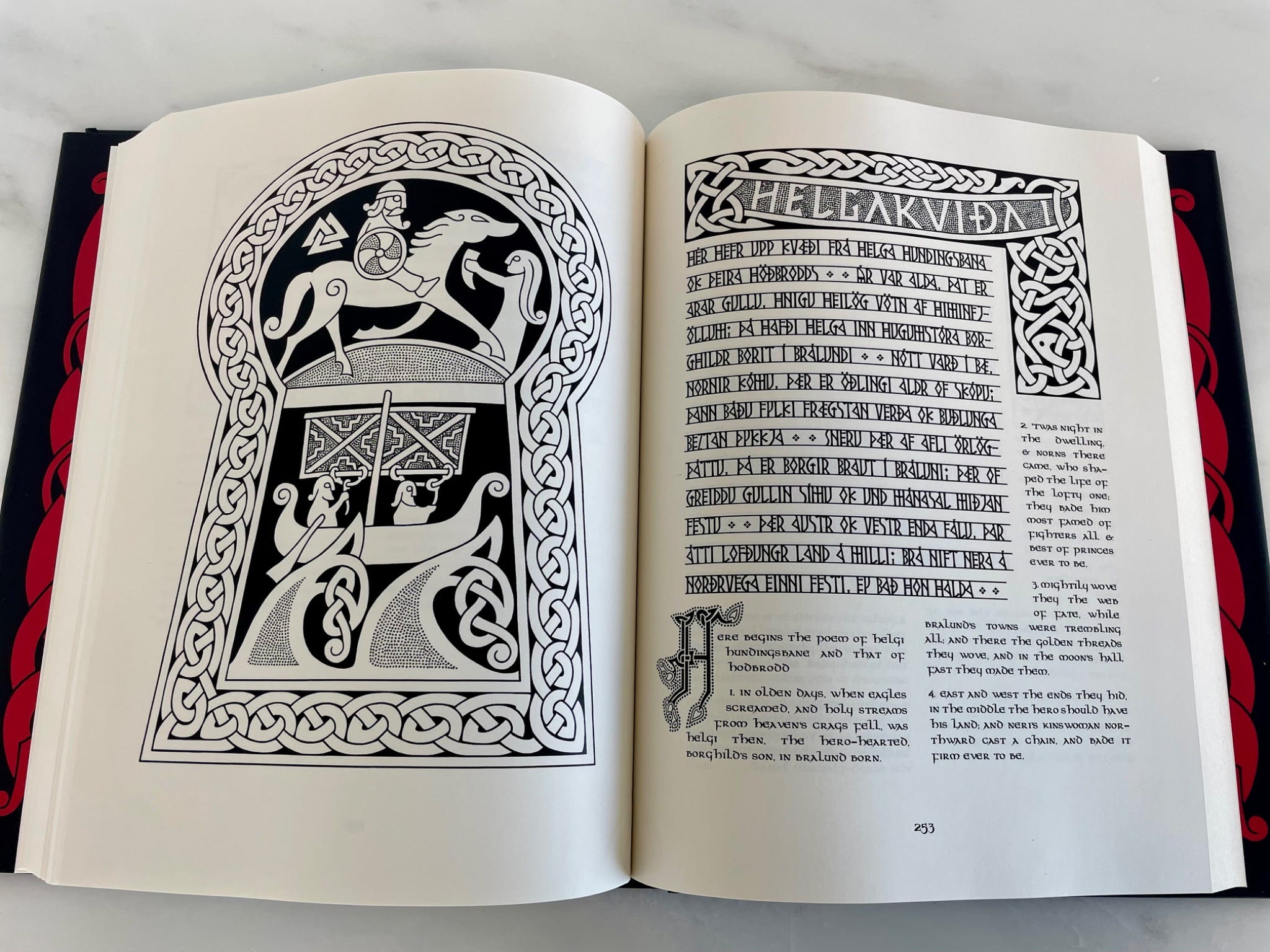
With a host of hand-drawn illustrations, chapter-heading details, and a dual-language text, this has the feel of a special Medieval manuscript version of the text.
More to come in a few weeks. Thanks for reading!