
Mathoms No. 3
Welcome to the third issue of Mathoms, a Tolkien newsletter! Thanks to the many new subscribers for joining since the last issue, and thanks especially to those of you who have become paid subscribers - your support helps me to focus more on reading and writing about Tolkien and sharing the interesting thoughts that result!
An Inkling
There is a part of Morgoth’s Ring in which Tolkien is re-working early parts of The Silmarillion in a section called “The Rape of the Silmarils.” I was reading this a few weeks ago and made a connection I hadn’t before. The quote that stood out to me was this one:
Then again there was silence, and thought was stilled. But after a while Nienna arose, and she went up onto the Mound; and she cast back her grey hood, and her eyes shone like stars in the rain, for her tears were poured out, and she washed away the defilements of Ungoliante. And when she had wept she sang slowly, mourning for the bitterness of the world and all hurts of the Marring of Arda.
This is after the attack of Morgoth and Ungoliant, who have destroyed the Two Trees and stolen the Silmarils. It differs little from the published text of The Silmarillion, and the differences are not my concern here. Nienna’s tears wash away “the defilements of Ungoliante,” and her song mourns for the world. After the Noldor leave Valinor, we read in The Silmarillion that
Manwë bade Yavanna and Nienna to put forth all their powers of growth and healing; and they put forth all their powers upon the Trees. But the tears of Nienna availed not to heal their mortal wounds; and for a long while Yavanna sang alone in the shadows. Yet even as hope failed and her song faltered, Telperion bore at last upon a leafless bough one great flower of silver, and Laurelin a single fruit of gold.
Nienna’s tears clean and water the mound of the Trees, enabling them to bear one last flower and one last fruit, which in turn become the Moon and the Sun. And we may recall that when Yavanna originally sang her song of power to bring forth the Trees, it was Nienna who “thought in silence, and watered the mould with tears.” So Nienna’s tears help to bring forth both the Trees themselves and the fruit and the flower that become the Sun and the Moon.
After the publication of The Lord of the Rings, Tolkien sought to add context and backstory to Gandalf’s character, and he wrote more specifically about the role of Olórin (Gandalf) in Valinor before being sent to Middle-earth. Tolkien wrote: “Wisest of the Maiar was Olórin. He too dwelt in Lórien, but his ways took him often to the house of Nienna, and of her he learned pity and patience.” In this way, Tolkien provides an origin-story for Gandalf’s focus on pity, a theme that is of supreme importance in The Lord of the Rings. But Tolkien also gives us another connection I had overlooked until now. Gandalf, by learning directly from Nienna, has a special understanding of sorrow. Nienna, who mourns for the Trees after their destruction, and whose tears brought the Trees to life in the first place, is the one to teach Gandalf. This gives new depth of meaning to Gandalf’s words at the Grey Havens:
Well, here at last, dear friends, on the shores of the Sea comes the end of our fellowship in Middle-earth. Go in peace! I will not say: do not weep; for not all tears are an evil.
“Do not weep; for not all tears are an evil.” Indeed, Gandalf has learned about tears and sorrow firsthand from Nienna. He knows that her tears produced that great beacon of hope, the Sun. And he knows that Nienna’s tears also produced great beauty in the Two Trees. To borrow a phrase from “The Field of Cormallen,” we might say that Nienna’s tears, while sorrowful, “are the very wine of blessedness.” So when Gandalf tells the hobbits that “not all tears are an evil,” he knows this better than anyone in Middle-earth. He has seen Nienna’s tears of blessedness firsthand, tears that wash away defilement and that produce great beauty.
What I wrote this month
This week, I wrote some thoughts on the blog about the origin of the Elendilmir, as well as some similar objects that resemble it.
Also, while not something I wrote this past month, yet perhaps particularly apt for this week, which for most Western Christians is Holy Week, you may be interested in an old blog post I wrote for a previous Holy Week, about resonances of the Harrowing of Hell in The Lord of the Rings, and connections with Holy Week liturgical practices.
What I read this month
On his wonderfully specific “Silmarillion Minutiae” blog, Brian Henderson shares with readers a draft preface to an imagined catalogue of a Silmarillion book collection. An enjoyable read for book collectors, or just fans who want to know about the publication history of The Silmarillion:
The Silmarillion might be regarded as the fulcrum work in Tolkien publishing, sitting at the cusp between the “primary” work published in Tolkien’s lifetime, and the flood of posthumous material—presented with the ‘burden’ of commentary (beginning with Unfinished Tales in 1980)—that was to follow. In collecting terms, it is unquestionably overshadowed by that primary material: The Hobbit and The Lord of the Rings (amongst others). And in Tolkien studies it feels rather marginalised, having been superseded—certainly for the academic and scholar—by the voluminous History of Middle-earth series. It is a work that sits in neither camp.
However, from a literary perspective, this makes The Silmarillion the most intriguing. Presented as a single stand-alone text, only the publication of the History of Middle-earth would reveal the more complex reality. The interplay of the internal imagined world of story-tellers, compilers, redactors, translators, and fabled books; the external reality of Tolkien the author, with his variant texts, feigned history, and material retold in longer and shorter forms in varying styles; and the editorial role Christopher played in assembling this material for publication—all of these features, together, combine to make The Silmarillion a compelling primary- and secondary-world literary artefact.
In The Journal of Tolkien Research, Clive Shergold has a short and enjoyable pictorial article about the Welsh railway wagons Tolkien saw in his youth, which helped spark his interest in the language.
Having recently written my own reflection about the character of Merry Brandybuck, I was pleased to read Stephen Winter’s lovely reflection on Merry and Pippin:
There comes a moment in every life when we realise that the grown ups are not going to turn up and whatever happens next we are going to have to face it alone. For some people that moment will come far too soon but whenever it does come it will always feel that it has come when we are not prepared for it. At that moment we will feel utterly inadequate for what we are about to face and like Pippin in Minas Tirith we will want Gandalf to make us feel better or like Merry on the road to Edoras we will plead with Aragorn not to leave us behind but we will receive nothing. Like Pippin we will feel like a pawn in the wrong game or like Merry we will feel like a useless piece of baggage. But like both of them we will be carried to a place where there is no-one else to act and we will either run away or do what we can.
I read this a few years ago when it was published, but I had occasion to return to it for research this past month and highly recommend Jane Beal’s article about finches in The Lord of the Rings. Birds are an underexplored area of symbolism in Tolkien’s works, and Tolkien would almost certainly have known of the widespread Christological significance of the goldfinch in Medieval and Renaissance art. Beal also explores a variety of different aspects of finches in connection with Tolkien. A very worthwhile read during Holy Week.
Giovanni Carmine Costabile compares some interesting similarities between the Tibetan Story of the Boy with the Deformed Head and the tale of Beren and Luthien. Not much to go on besides the similarity of the scenes in terms of whether Tolkien had read the Tibetan story or not; i.e., we have no evidence of such. I do have a comment on something Costabile says at the end, however. Here is a section near the end of his article:
Furthermore, the same notions constitute an even stronger reason to exclude that Tolkien may have been inspired by Anglo-Saxon elves in his devising his Middle-earth Elves, since in Old English elves are the offspring of Cain. In Letter 236, Tolkien commented that “[i]n all Old English poetry ‘elves’ (ylfe) occurs once only, in Beowulf 112, associated with trolls, giants, and the Undead, as the accursed offspring of Cain”. Tolkien did not agree with such a negative association, as he makes clear in his prose translation of Beowulf 112: “ogres, goblins, and haunting shapes of hell”.
This reference to Letter 236 omits the important context immediately preceding Tolkien’s comment about elves in Beowulf: “‘elf’ we should suppose to be associated only with rheumatism, toothache and nightmares, if it were not for the occurrence of aelfsciene ‘elven-fair’ applied to Sarah and Judith!” Which itself is an acknowledgement that there is a reference to the beauty of elves in a positive light in Old English.
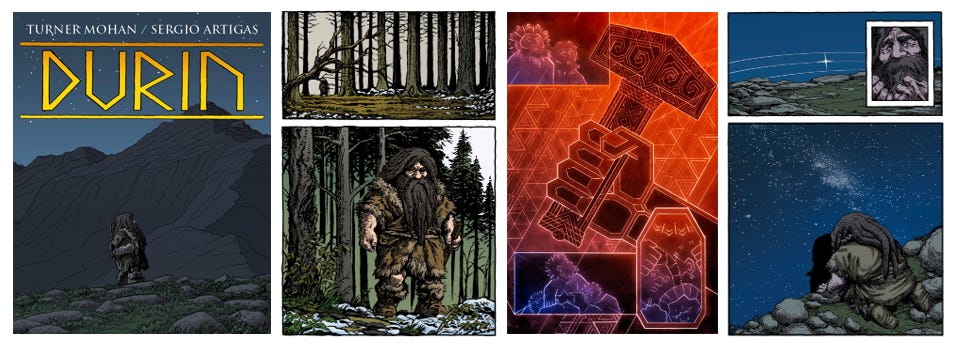
Finally, with a hat tip to David Haden, I enjoyed this first issue of a forthcoming seven-issue series in graphic novel/comic book form about the life of Durin the Deathless from Turner Mohan and Sergio Artigas. Here’s few images to interest you:
The Hoard
Some recent additions to my library and Tolkien collection. I added a Second Impression of B.L. Joseph’s Elizabethan Acting to my collection.
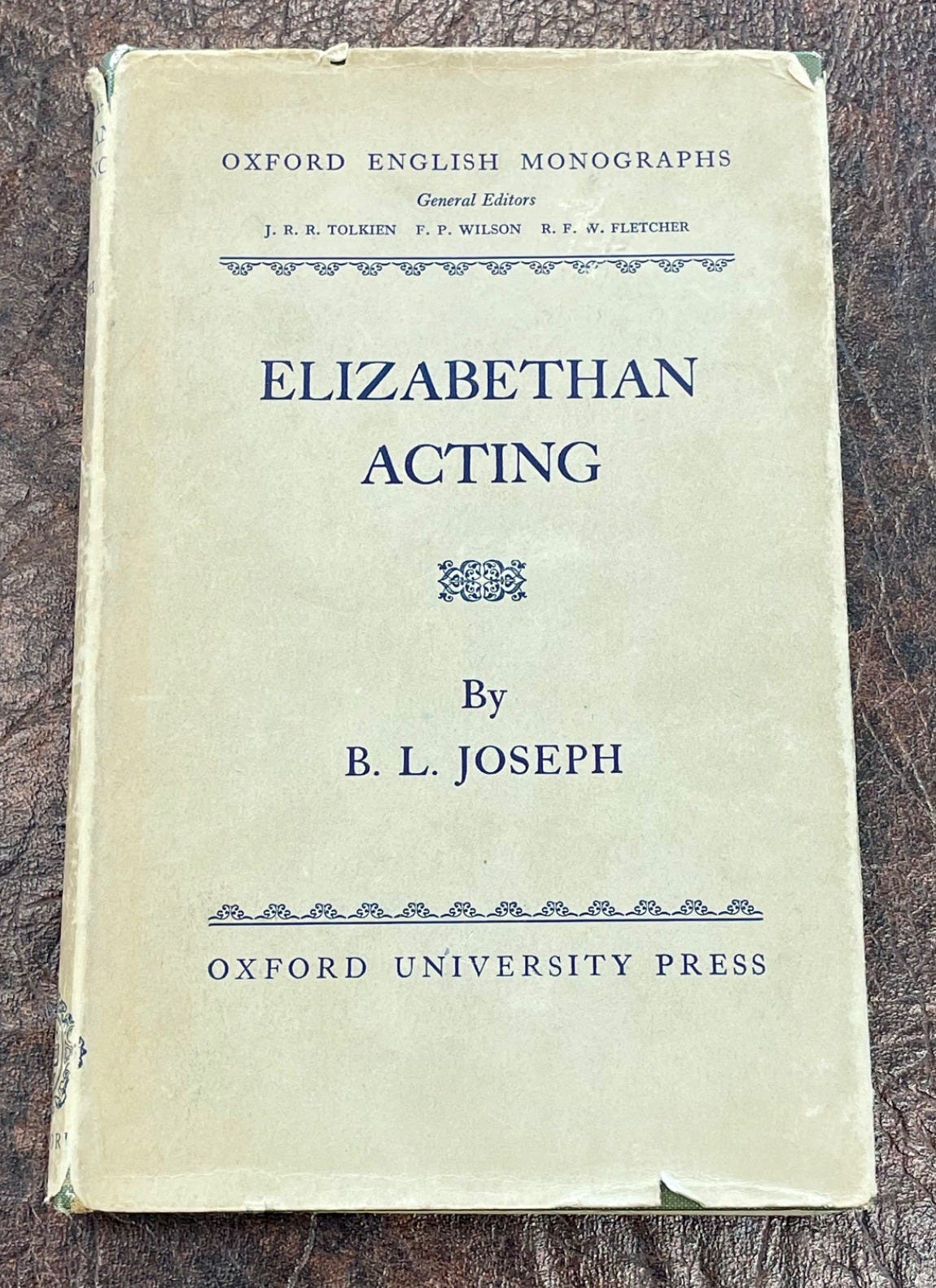
The book explores acting practices in Elizabethan England. As General Editor of this Oxford English Monographs series, Tolkien contributed editorial oversight, comments, and encouragement to the author.
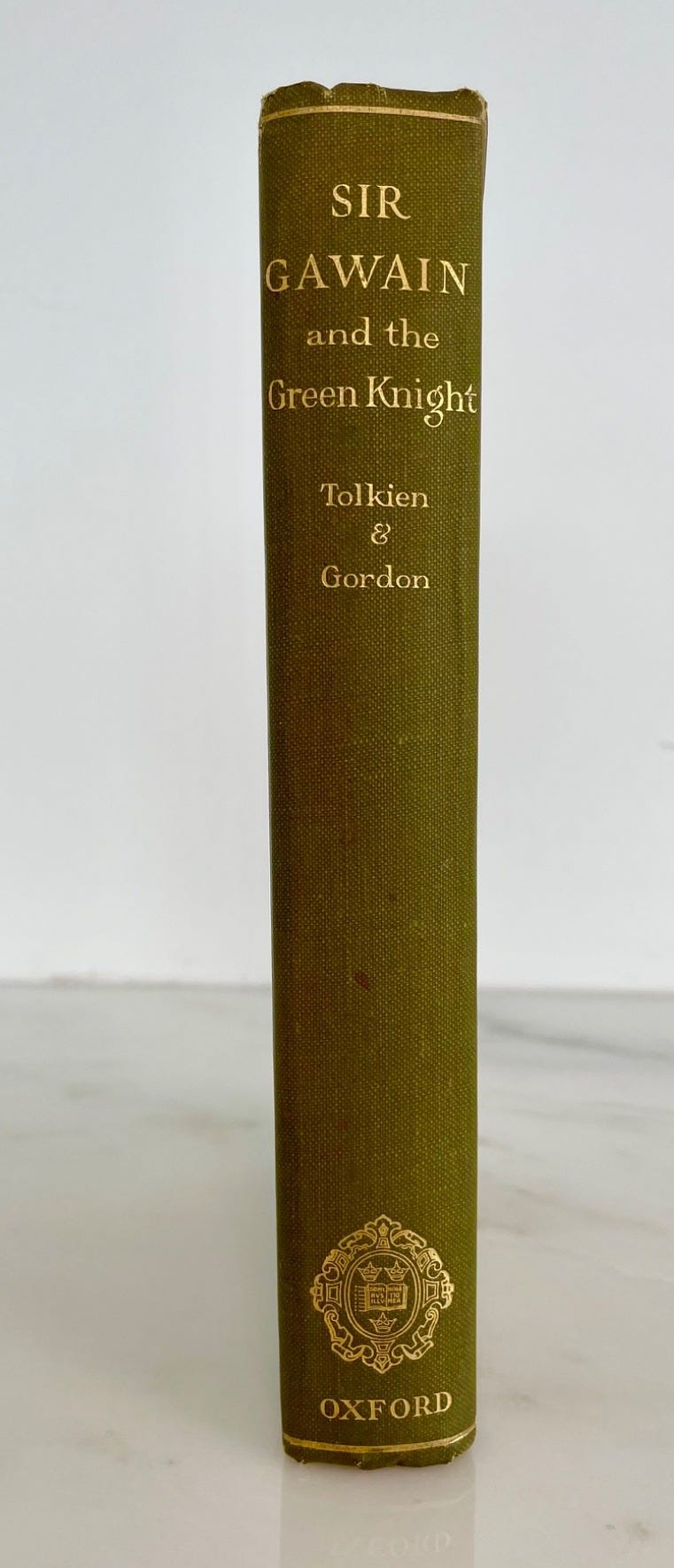
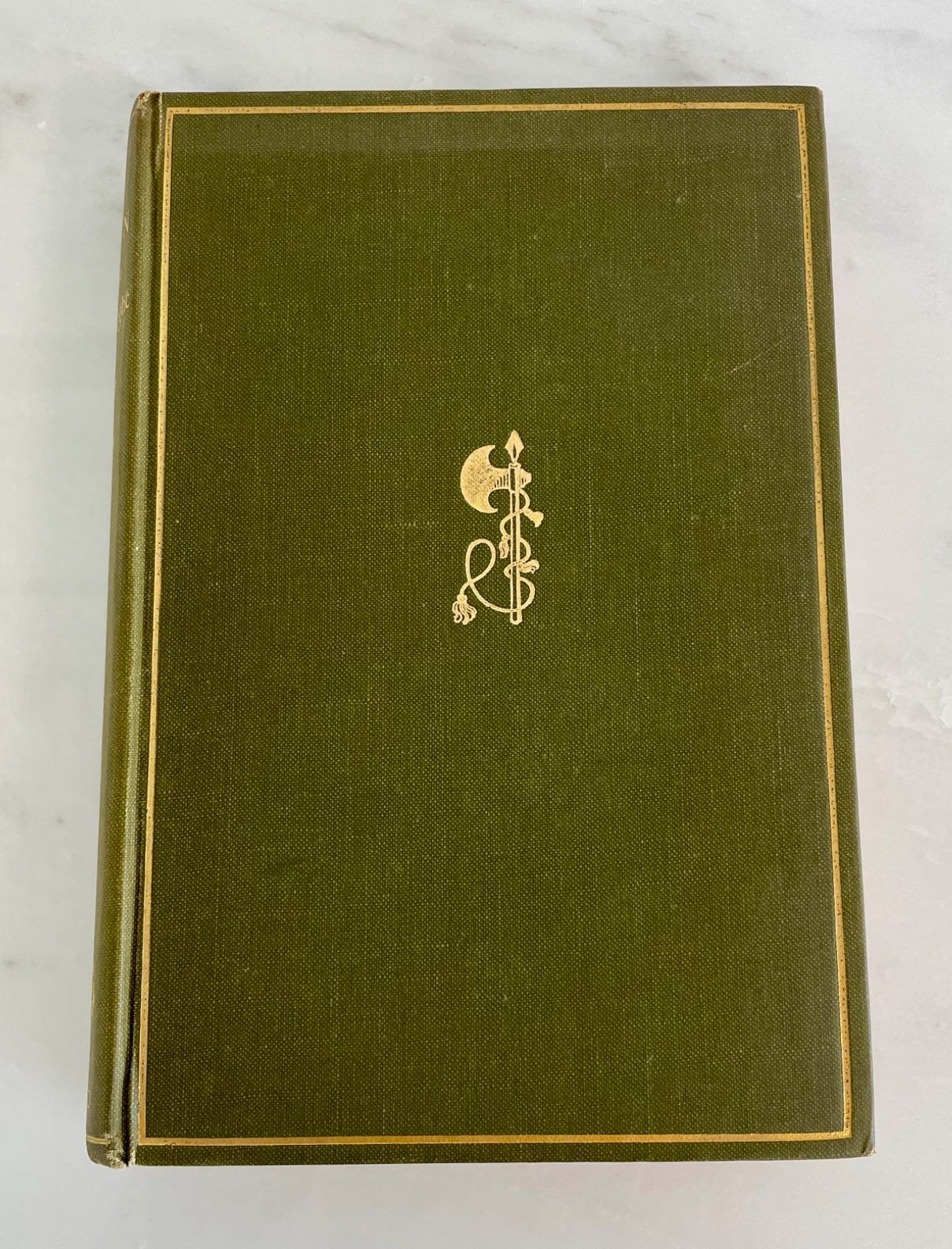
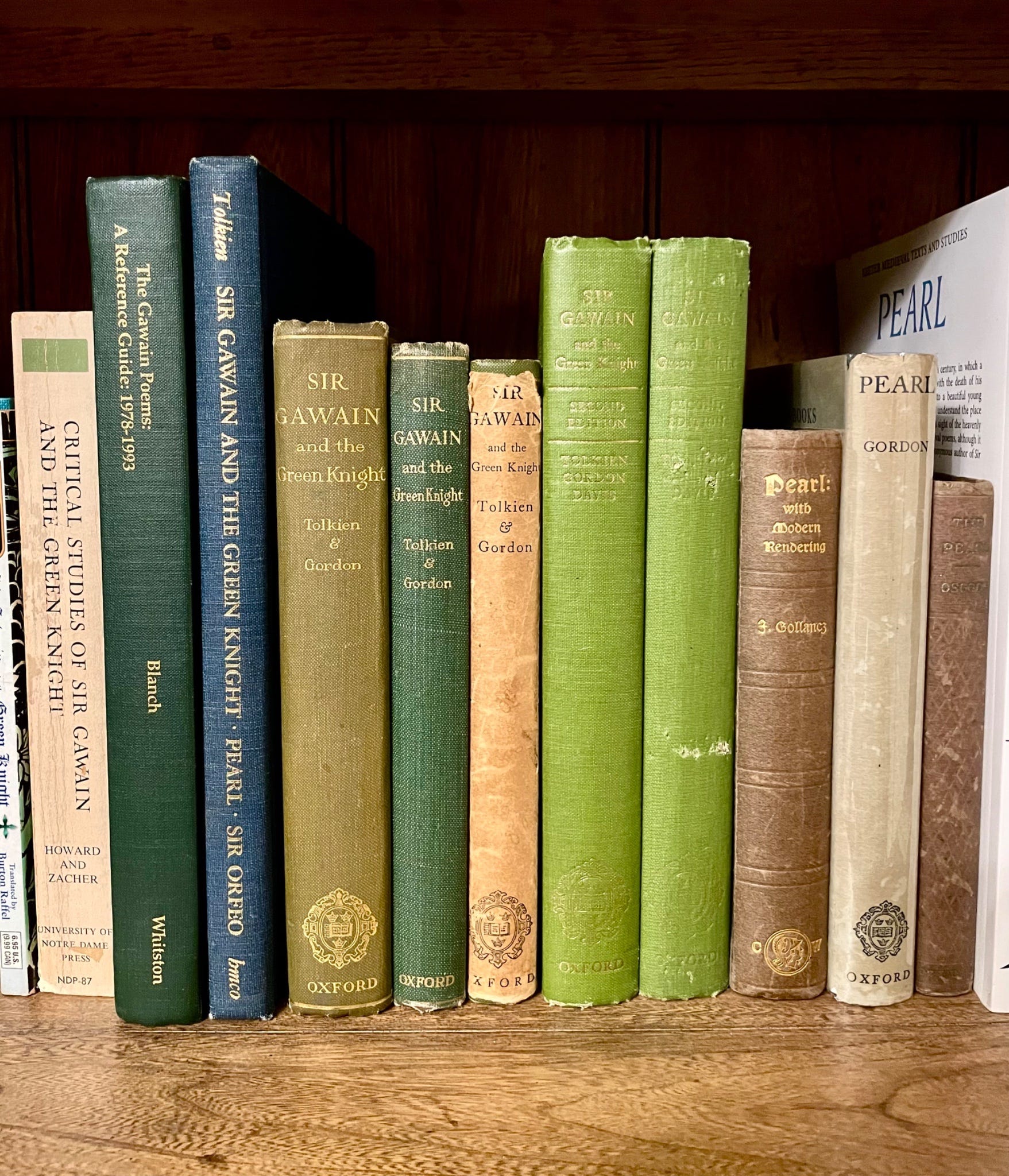
I also added a First Edition, Second Impression of Tolkien and Gordon’s edition of Sir Gawain and the Green Knight to my collection. First Impressions of this book tend to cost more than $1,000, so this is probably the closest I’ll get to the original for while.
Here’s an updated view of the Tolkien and Sir Gawain section of my library:
That’s all for now. Thanks for reading!
Thank you for this, first the reminder of Nienna's tears--and her part in the education of Gandalf. Helps set up his great line about pity staying Bilbo's hand (and Tolkien's wordplay with the meaning(s) of he word "pity").
Not to mention, how this allows the Ring's evil not to corrupt Bilbo, his first act as Ringbearer being one of pity...